

The Personalization Gap: Why You Know Your Members Best, But They Feel Strangers
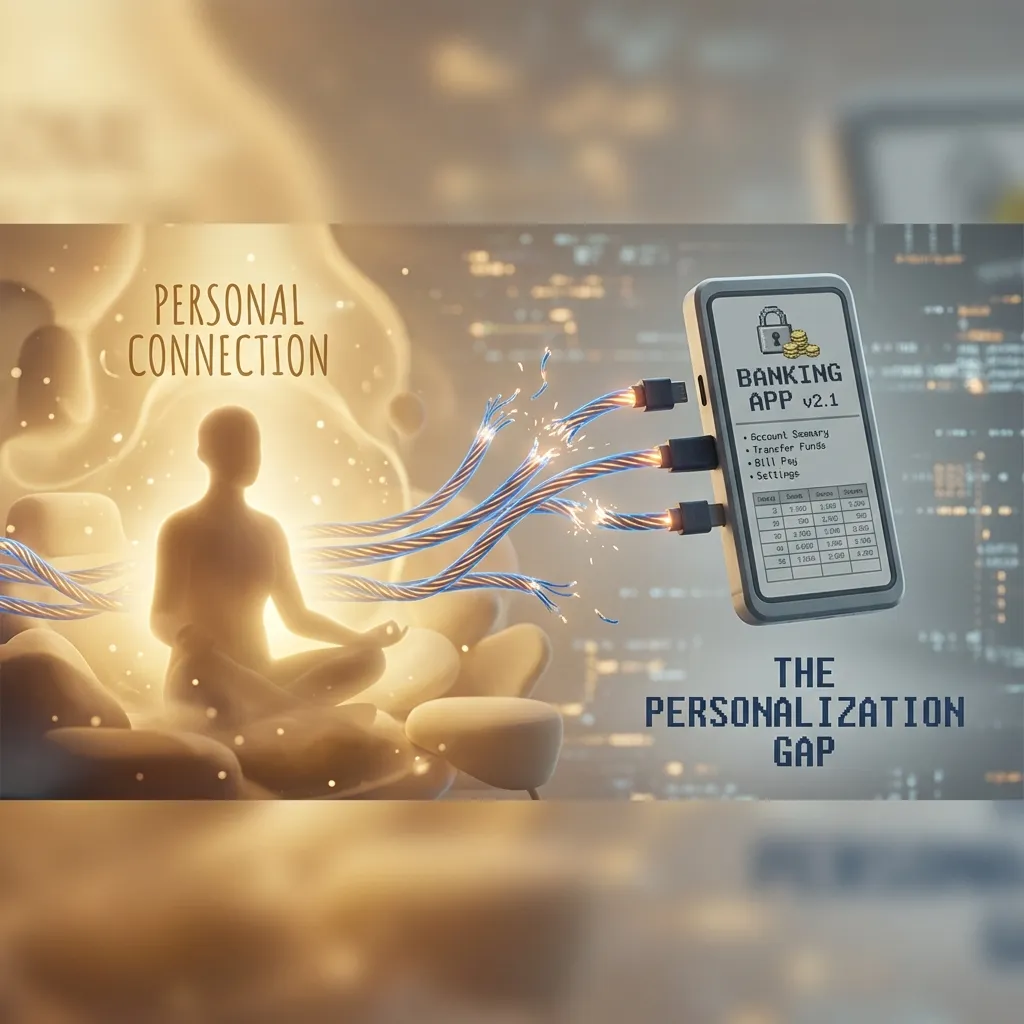
Every credit union claims to offer personalized service. It’s the core differentiator against the big banks. "We know our members," the mantra goes. "We treat them like family."
And in the branch, that’s often true. But in the digital channel—where 80% of interactions now happen—that "family" feeling often vanishes.
Instead of a warm greeting and a helpful tip, members log in to see a generic dashboard:
- Standard promotional banners.
- A list of accounts.
- A button to "Apply for a Loan."
This is the Personalization Gap. It’s the disconnect between the depth of data you have about a member and the value of the experience you deliver back to them.
The Data Paradox
You actually know more about your members' financial lives than anyone else. You see:
- Where they shop (transaction data).
- What bills they pay (subscription insights).
- How their savings are trending (balance history).
- When they are financially stressed (OD/NSF fees).
Yet, most banking apps behave as if they know nothing about the user.
"A member who just paid off a car loan shouldn't see an ad for a new auto loan. They should see a congratulatory message and a suggestion for how to effectively use that freed-up cash flow."
When digital experiences are generic, members feel unseen. And when they feel unseen, they look for tools that do see them—apps like Rocket Money or Copilot that ingest external data to provide the insights their primary financial institution isn't offering.
Bridging the Gap
Closing the personalization gap doesn't require a massive AI overhaul or a team of data scientists. It requires shifting your digital strategy from transactional to relational.
1. Shift from Selling to Solving
Instead of using data to identify cross-sell opportunities ("They have a mortgage, sell them HELOC"), use data to solve problems ("Their utility bill just doubled, warn them").
2. The Feedback Loop
Personalization isn't a one-way street. Good digital experiences ask questions.
- "Is this a subscription you want to keep?"
- "Did you mean to spend this much on dining out?" By inviting member input, you refine your data and deepen the relationship simultaneously.
3. Contextual Relevance
The right offer at the wrong time is spam. The right insight at the right time is a lifeline.
- Wrong: Offering a credit card when a member is overdrawn.
- Right: Offering a low-interest consolidation loan when a member helps distinct high-interest credit card payments.
The ROI of Intimacy
When you close the personalization gap, you don't just get higher engagement metrics. You earn the right to be the member's primary financial guide.
Digital intimacy converts. It builds trust. And most importantly, it proves that the cooperative model isn't just a philosophy—it's a practical advantage in a digital-first world.
You have the data. The next step is to use it to make your members feel seen.